

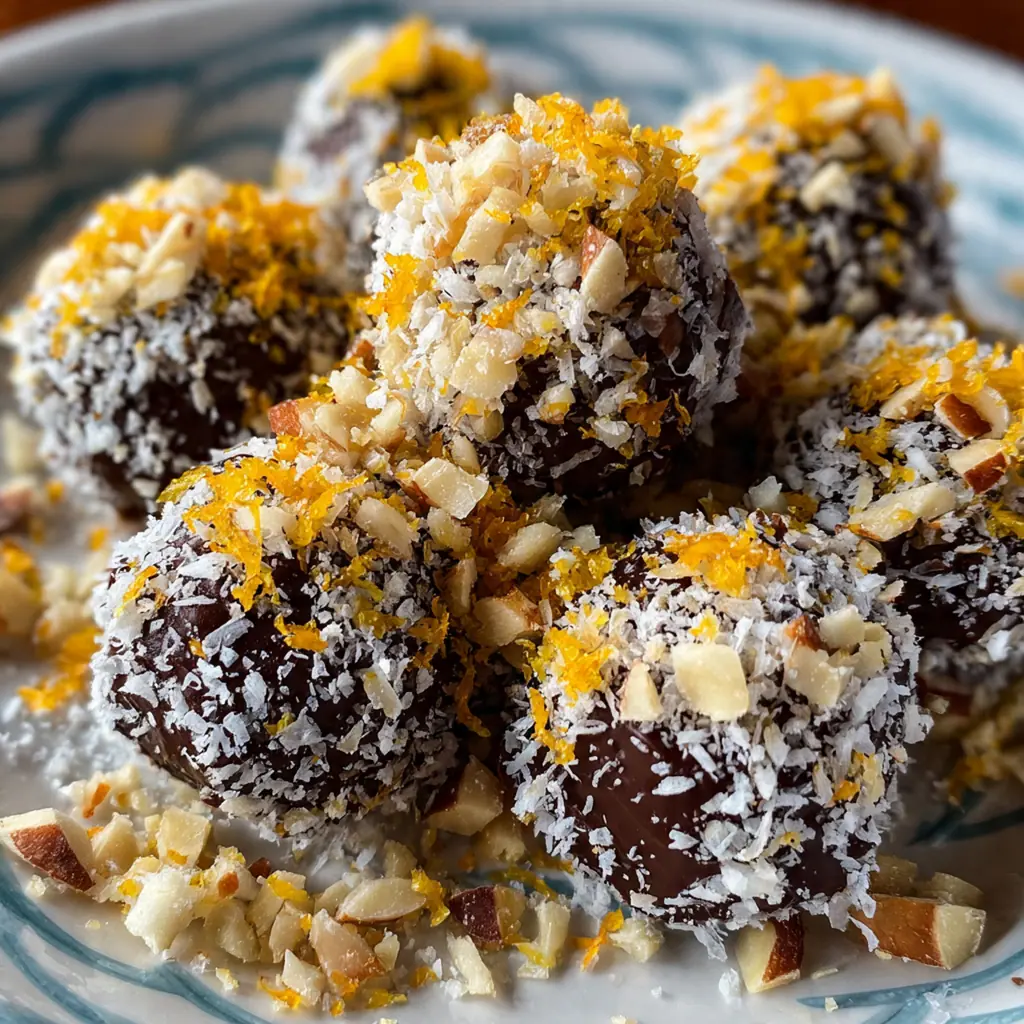
Making these Dark Chocolate Orange Truffles is one of my favorite ways to bring a touch of French patisserie elegance home. The classic pairing of rich dark chocolate and bright, aromatic orange is a timeless combination that feels both luxurious and comforting. These homemade orange truffles prove you don’t need professional tools to create a confection that impresses everyone. They’re surprisingly straightforward, relying on the quality of a few simple ingredients for a truly spectacular result.
Why You'll Love This Recipe
- The rich dark chocolate and bright citrus orange is a flawless, sophisticated pairing
- They require absolutely no baking and look like they came from a chocolatier
- You can customize the coatings endlessly for different looks and textures
- Perfect for gifting or as a special treat just for you
- My friends always ask me to bring these to holiday parties
Ingredients You’ll Need
- High-quality dark chocolate (70% cacao): This is the star, so choose a bar you love eating on its own for the deepest, richest flavor and perfect firm ganache texture.
- Heavy cream: Provides the lush, creamy base for the ganache, creating that signature melt-in-your-mouth center when heated and combined.
- Unsalted butter: Softened butter stirred in at the end adds an extra layer of silkiness and a lovely rounded mouthfeel to each bite.
- Orange liqueur: A small amount like Grand Marnier intensifies the orange flavor with a subtle, sophisticated warmth that complements the dark chocolate beautifully.
- Fresh orange zest: The essential oils in the zest provide the brightest, truest citrus perfume that artificial flavoring just can’t replicate.
- Pure vanilla extract: A secret backbone that enhances all the other flavors, adding a touch of warm, floral complexity to the ganache.
- Fine sea salt: A pinch is crucial to balance the sweetness and heighten the chocolate’s depth, making the orange notes pop even more.
- Dutch-process cocoa powder: This darker, less acidic cocoa creates a professional-looking, intensely chocolatey coating that isn’t bitter.
- Additional orange zest for garnish: A tiny sprinkle on top adds a gorgeous pop of color and an aromatic hint of what’s inside.
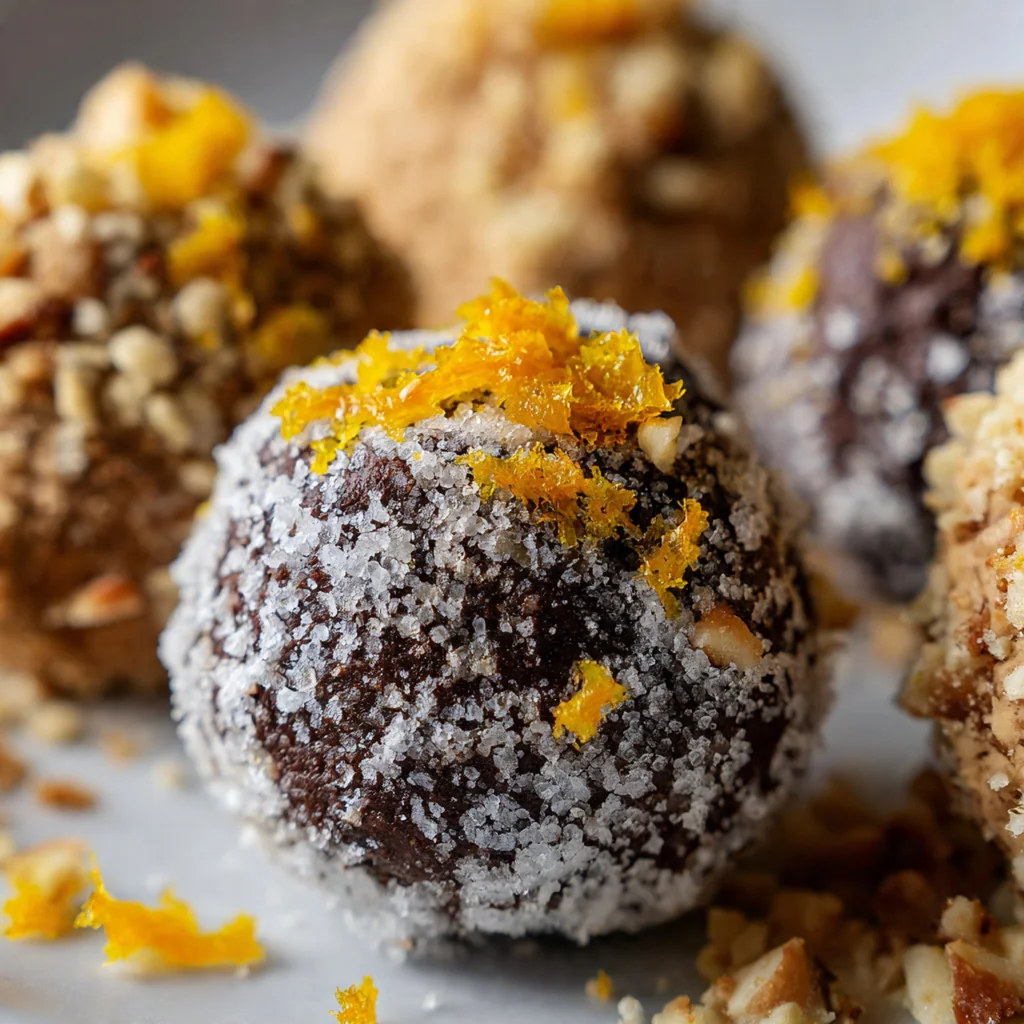
- Powdered sugar for coating: A lovely snowy-white alternative to cocoa powder that offers a sweeter, classic confection look.
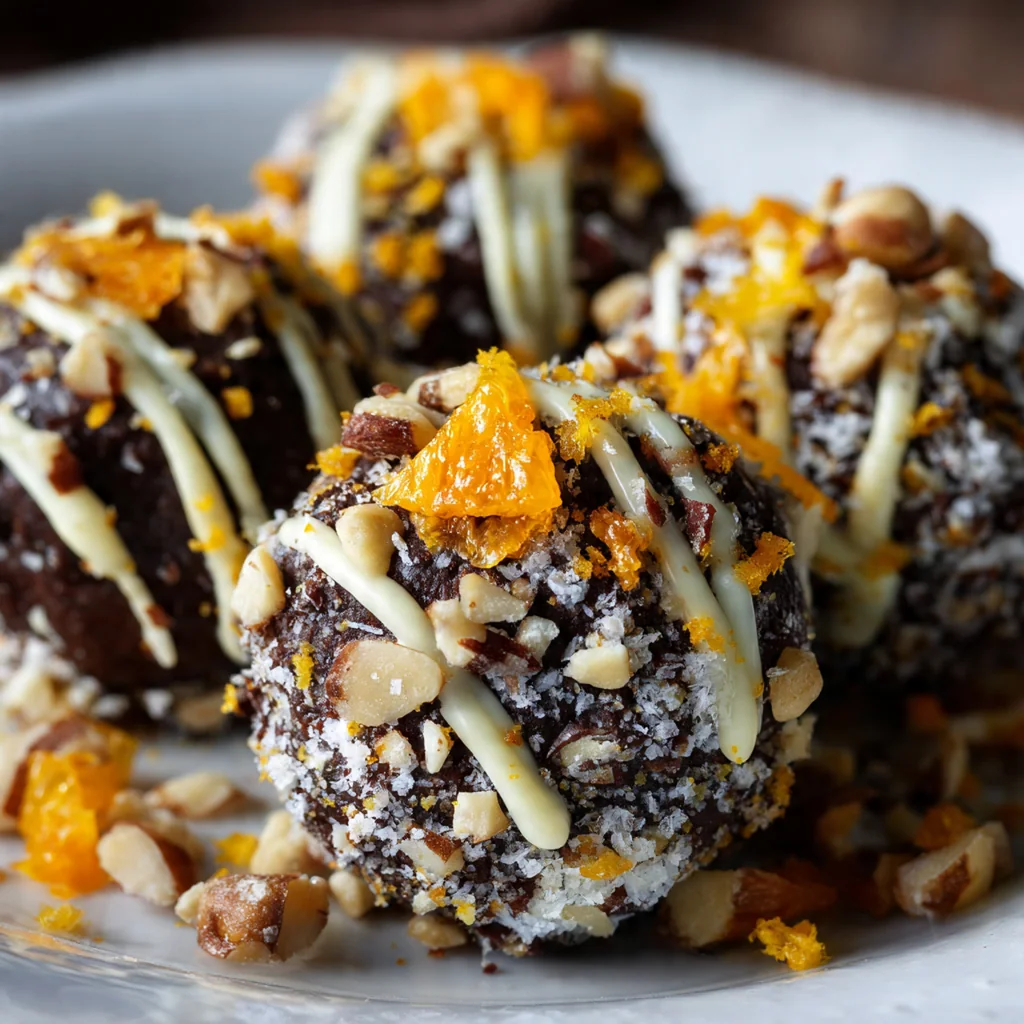
- White chocolate for drizzling: Melted and drizzled over the finished truffles, it creates a stunning visual contrast and an extra hint of sweetness.
How to Make It
Chop and Prepare the Chocolate:
Start by finely chopping your dark chocolate and placing it in a medium heatproof bowl. Smaller pieces melt more evenly and quickly when the hot cream hits them, ensuring your ganache is perfectly smooth from the start.
Heat the Cream:
Pour the heavy cream into a small saucepan and warm it over medium heat. You want it just barely simmering around the edges, not at a rolling boil, to avoid scorching and to perfectly melt the chocolate.
Create the Ganache Base:
Carefully pour the hot cream over the chopped chocolate and let it sit undisturbed for a full two minutes. This gentle heat works its magic, softening the chocolate so it stirs together into a glossy, lump-free mixture.
Flavor the Ganache:
Once your base is smooth, stir in the softened butter, orange liqueur, fresh zest, vanilla, and salt. The residual heat will melt the butter completely, marrying all those wonderful citrus and rich flavors together.
Chill Until Firm:
Press a piece of plastic wrap directly onto the surface of the ganache to prevent a skin from forming. Refrigerate it for at least an hour until it’s firm enough to scoop but not rock hard.
Scoop and Roll the Truffles:
Use a small spoon or melon baller to scoop portions, then roll them quickly between your palms. If your hands get too warm, rinse them under cold water to keep the ganache from melting.
Coat and Set:
Roll each ball in a shallow dish of cocoa powder until fully covered, then place them on a parchment-lined sheet. A final brief chill in the fridge for about 15 minutes helps them set perfectly for serving.
You Must Know
- High quality chocolate is non-negotiable for the best texture and taste
- Letting the ganache sit after adding the hot cream is key to a smooth start
- Chilling your hands makes rolling the truffle balls much easier
- That final short chill after coating sets everything perfectly
Storage Tips
Store your finished orange truffles in a single layer in an airtight container in the refrigerator, where they’ll keep their perfect texture for up to two weeks. If you need to stack them, separate the layers with sheets of parchment paper to prevent them from sticking together or marring their beautiful coatings. For longer storage, you can freeze them solid on a baking sheet before transferring to a freezer-safe container for up to three months, then just thaw overnight in the fridge before serving. They’re best enjoyed slightly chilled, which makes them a fantastic make-ahead dessert for entertaining.
Ingredient Substitutions
If you prefer a non-alcoholic version, simply swap the orange liqueur for a tablespoon of orange juice concentrate, which will still give you a concentrated citrus punch. For a dairy-free option, use a high-quality dairy-free dark chocolate bar and substitute the heavy cream with full-fat, well-stirred coconut cream. While Dutch-process cocoa is ideal for its color and mild flavor, natural cocoa powder will work in a pinch, though it may taste slightly more acidic. Don’t have Grand Marnier? Any orange-flavored liqueur like Cointreau or even a plain brandy will add a nice warmth, though the orange flavor will be milder.
Serving Suggestions
I love serving these orange truffles slightly chilled with a tiny cup of rich espresso or a glass of tawny port, as the bitterness and sweetness play off each other magically. They’re also stunning arranged on a dessert board alongside fresh berries, some toasted nuts, and a few pieces of good cheese for a sophisticated end to a meal. For a simple treat, just place a couple in a petite paper cup with your afternoon tea – it transforms an ordinary moment into something really special.
Cultural Context
The chocolate truffle, named for its resemblance to the prized French fungus, has its roots in French confectionery artistry of the late 19th century. The combination of chocolate and orange, however, is a classic flavor pairing celebrated across Europe, particularly in places like Belgium and Italy where high-quality cocoa meets vibrant citrus. Making them at home captures the spirit of French *artisanat* – the craft of turning a few exquisite ingredients into a luxurious, handcrafted indulgence. It’s a beautiful reminder that the most impressive desserts often have beautifully simple foundations.
Pro Tips
- Use a sharp knife to chop the chocolate finely for seamless melting
- If your ganache is too soft after chilling, let it rest at room temperature for five minutes
- Roll the truffles in cocoa powder immediately after shaping for the best adherence
- For clean drizzles, use a fork or a small piping bag with the tiniest hole cut
- I always make a double batch because they disappear so fast
Frequently Asked Questions
Use a high-quality dark chocolate bar with 70% cacao for the best flavor and texture. Chopping it finely ensures it melts smoothly into the warm cream for a perfectly silky ganache center in your Orange Truffles.
Absolutely! Orange Truffles are an excellent make-ahead dessert. Once coated, store them in an airtight container in the refrigerator for up to a week. Their flavor even improves after a day or two, allowing the orange and chocolate to meld.
If you prefer non-alcoholic Orange Truffles, you can replace the Grand Marnier with an equal amount of fresh orange juice concentrate or simply double the amount of fresh orange zest for a more intense citrus flavor.
The ganache is ready when the mixture is smooth, glossy, and slightly thickened after chilling for about an hour. It should be firm enough to scoop and roll into balls without being sticky or melting in your hands.
Serve these French-inspired Orange Truffles with strong espresso, a glass of dessert wine like port, or alongside a cheese plate. They’re a decadent standalone treat that completes any elegant meal.