

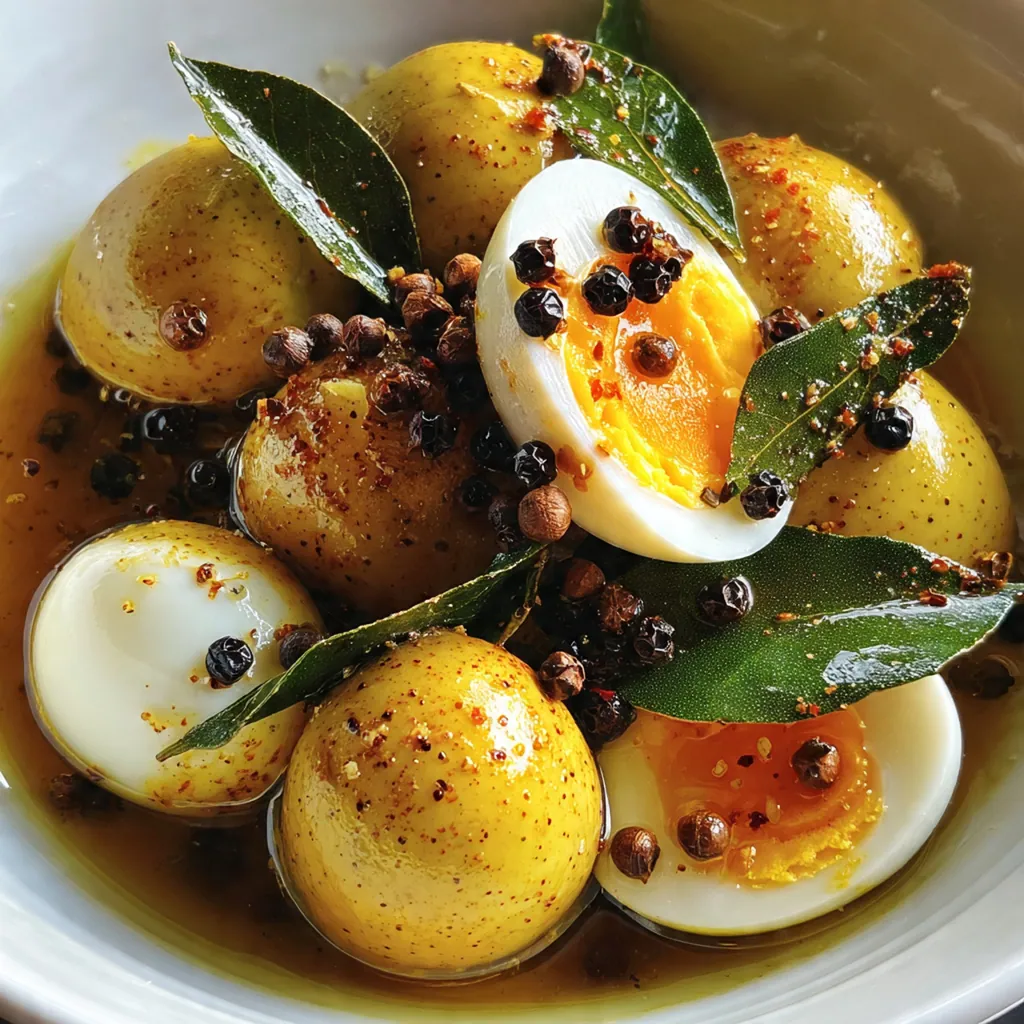
Mustard pickled eggs are a tangy, protein-packed snack that holds deep roots in Pennsylvania Dutch tradition. This classic recipe combines hard-boiled eggs with a zesty vinegar brine infused with warm spices and bold mustard flavor. The magic happens in your refrigerator over a few days, allowing the flavors to deepen into something truly special. I always keep a jar in my fridge during the summer months because they are incredibly versatile for salads, sandwiches, or simple snacking. Making these at home is surprisingly easy and costs a fraction of store-bought versions.
Why You'll Love This Recipe
- No canning required – just pop them in the fridge for easy, safe storage
- Cost-effective way to preserve eggs for long-term eating
- Spice level is easily adjustable to your preference
- Versatile condiment that works on salads, sandwiches, or as a snack
- Gets better with age – the flavor intensifies over the first week
Ingredients You’ll Need
- Large eggs: The star of the show providing protein and texture. Farm-fresh eggs peel easier than older ones.
- White distilled vinegar: Creates the acidic base that preserves the eggs and penetrates the shell. Look for 5% acidity for safe pickling.
- Water: Dilutes the vinegar slightly for a balanced brine without overpowering tartness.
- Yellow mustard seeds: Essential for that classic sharp flavor and texture. They soften slightly as they cure.
- Whole celery seeds: Adds earthy, savory notes that complement the mustard. A tiny pinch goes a long way.
- Mustard powder: Boosts the mustard flavor and helps thicken the brine slightly. Use dry, not prepared mustard.
- Pickling spice: A blend of aromatics like coriander and cloves that adds complexity. Store in a cool, dark place to keep it fresh.
- Turmeric powder: Gives the brine and eggs a beautiful golden hue. It also adds subtle earthy warmth.
- Sugar: Just a touch balances the sharp vinegar and spice. Granulated white sugar dissolves best.
- Kosher salt: Pure salt without additives ensures a clear brine. It also draws moisture out to preserve the eggs.
- Bay leaf: A subtle herbal background note that lifts the other flavors. Remove it before eating for texture.
- Garlic cloves: Adds pungent depth to the brine. Smashing them releases their essential oils for maximum flavor.
- Yellow onion: Slices melt into the brine and become a tasty garnish. Use fresh, firm onions for the best crunch.
- Fresh dill fronds: Optional but highly recommended for bright, grassy notes. It pairs perfectly with eggs.
- Red pepper flakes: Optional for those who like heat. Start with a small amount and adjust to taste.
How to Make It
Boil and Cool the Eggs:
Place the eggs in a single layer inside a large saucepan and cover with cold water by at least an inch. Bring this to a rolling boil over high heat, then immediately remove the pot from the burner. Cover the pot with a tight lid and let the eggs stand in the hot water for exactly 12 minutes to cook through perfectly.
Create an Ice Bath:
While the eggs cook, prepare a large bowl filled with ice and cold water. After the 12 minutes are up, use a slotted spoon to transfer the hot eggs directly into the ice bath. Let them chill for about 15 minutes until completely cool; this step is crucial to stop the cooking and prevent that unappetizing green ring from forming around the yolk.
Peel the Eggs Carefully:
Gently crack the shells all over on a clean counter and peel them under cool running water. The water helps slip the shell off cleanly. Set the peeled eggs on a clean kitchen towel to dry completely so they stay whole during the pickling process.
Simmer the Spiced Brine:
Combine the white vinegar, water, yellow mustard seeds, celery seeds, mustard powder, pickling spice, turmeric, sugar, kosher salt, bay leaf, and smashed garlic cloves in a medium saucepan. Bring the mixture to a boil over medium-high heat, stirring occasionally to dissolve the sugar and salt completely.
Bloom the Flavors:
Reduce the heat once the brine boils and let it simmer gently for 5 minutes. This allows the spices to bloom and the flavors to meld together harmoniously. Remove the pot from the heat and let it cool for 10 minutes; the brine should be warm, not scalding hot, when you pour it over the eggs.
Pack the Jar:
Pack the peeled eggs tightly into a clean 2-quart glass jar or container. Tuck the sliced yellow onion and the optional fresh dill fronds between the eggs. Pour the warm brine over the eggs, making sure they are completely submerged by at least half an inch.
Remove Air Bubbles:
Gently tap the jar on the countertop a few times to release any air bubbles trapped between the eggs. This ensures the brine circulates evenly around every egg. Seal the jar with a tight-fitting lid and let it cool down to room temperature before placing it in the refrigerator.
Cure and Wait:
Refrigerate the jar for at least 48 hours before eating to allow the mustard seeds to soften and the flavor to develop. For the absolute best flavor, I recommend waiting 5 to 7 days. You will notice the eggs turning a beautiful pale yellow color from the turmeric powder.
Serve and Enjoy:
Serve the eggs chilled using a clean, slotted spoon to lift them out of the brine. These mustard pickled eggs will keep refrigerated in your fridge for up to 3 months. Always use clean utensils when removing eggs from the jar to prevent spoilage or bacterial growth.
You Must Know
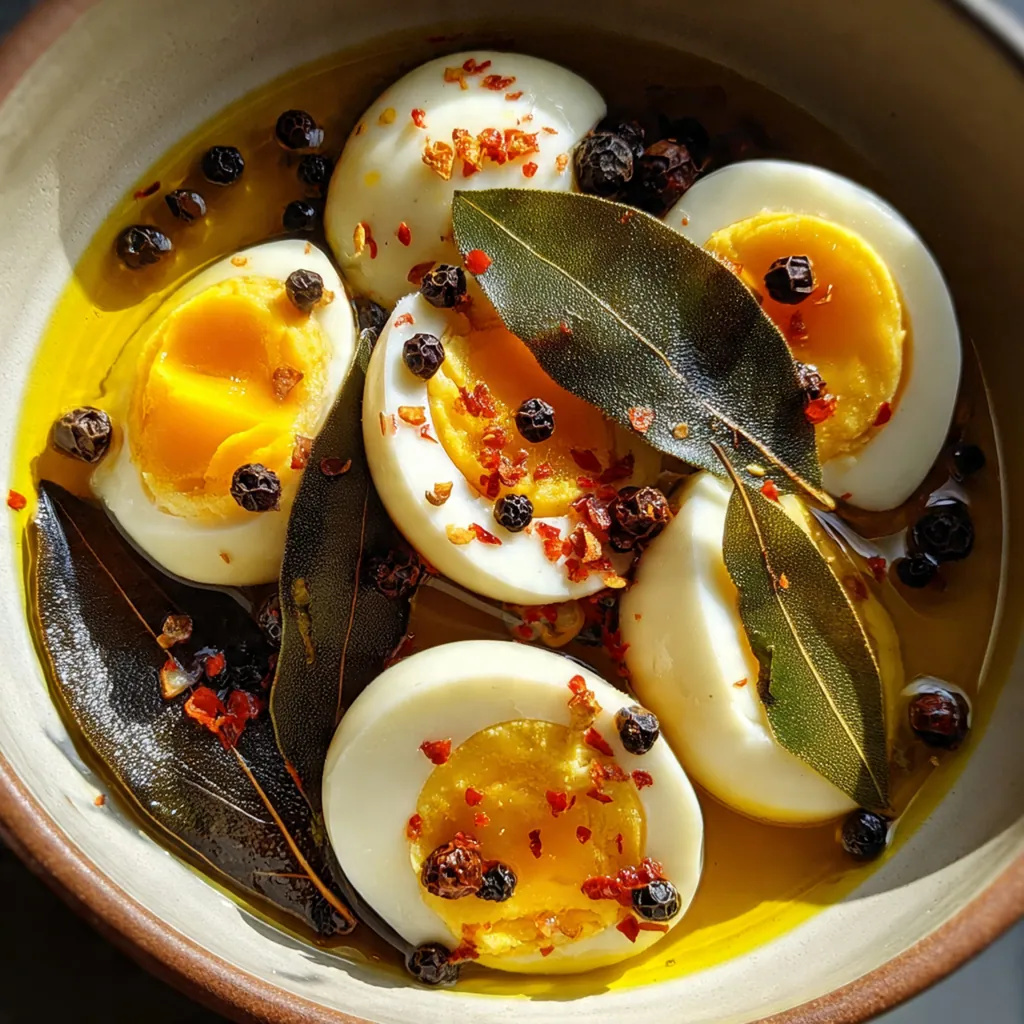
- The brine needs to be warm, not boiling, when you pour it over the eggs.
- Always use clean utensils to remove eggs from the jar to prevent spoilage.
- If the brine gets cloudy over time, that is normal from the spices settling.
- I find waiting the full 7 days makes the texture and flavor perfect.
Storage Tips
Store your mustard pickled eggs in the refrigerator inside a tightly sealed glass jar for up to three months. The cool temperature is essential for safety since we aren’t canning these in a water bath. It is totally normal for the brine to look a little cloudy after a few weeks as the spices release their compounds. If you ever notice any off odors, sliminess on the eggs, or mold, discard the entire jar immediately. I always keep mine on the bottom shelf of my fridge so they stay nice and cold. Using a clean fork or spoon every time you grab one is the best way to extend their shelf life.
Ingredient Substitutions
If you don’t have white distilled vinegar, apple cider vinegar works well but will give a slightly fruitier, darker brine. Yellow mustard seeds are traditional, but you can mix in some brown mustard seeds for a spicier kick and visual contrast. For the celery seeds, a small amount of dried celery leaves can work in a pinch, though the flavor will be milder. If you’re out of pickling spice, you can make a quick substitute with a bay leaf, a few peppercorns, and some coriander seeds. Feel free to swap the yellow onion for red onion if you want a pop of color in your jar.
Serving Suggestions
I love chopping these mustard pickled eggs and folding them into a classic potato salad for a tangy, protein-packed twist. They are fantastic sliced on top of a simple green salad with a vinaigrette dressing to cut through the richness. For a true Pennsylvania Dutch snack, serve them alongside saltine crackers and a sharp cheddar cheese. They also make an excellent appetizer on a charcuterie board, adding a briny contrast to cured meats. Simply eating them straight from the jar with a sprinkle of black pepper is my personal go-to afternoon snack.
Cultural Context
Mustard pickled eggs are a hallmark of Pennsylvania Dutch cuisine, a distinct culinary tradition from the German-speaking immigrants who settled in Pennsylvania. This style of preserving eggs was practical for rural families, providing a protein source that lasted through the winter months without refrigeration. The heavy use of mustard, vinegar, and spices reflects the German preference for tangy, preserved foods like sauerkraut and various pickles. While modern refrigeration has changed how we store food, the recipe remains a beloved comfort food in the region. It represents a resourceful way of cooking that honors simple ingredients and deep flavors.
Pro Tips
- Start tasting the eggs at the 48-hour mark, but day 5 is usually when the flavor is perfect.
- Farm-fresh eggs really do peel much easier than older store-bought eggs.
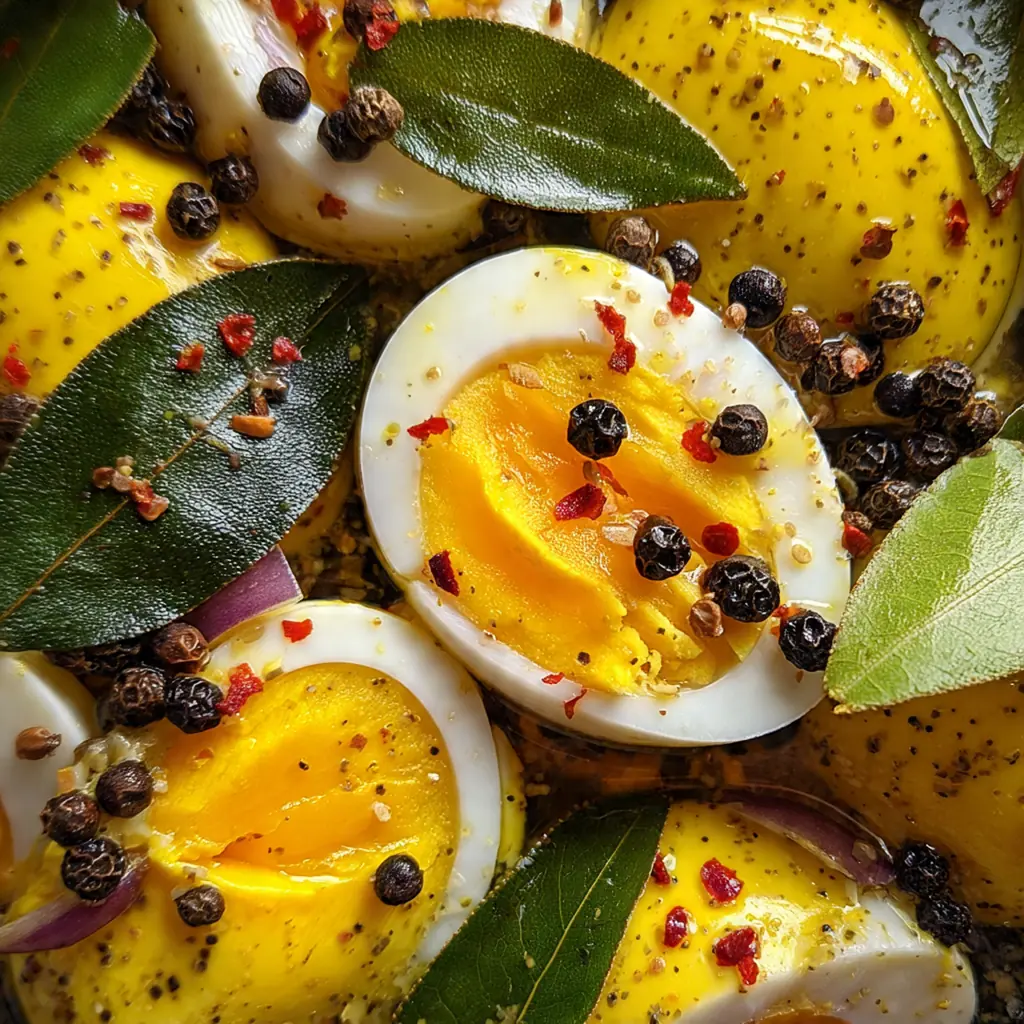
- For an even brighter yellow color, add an extra half teaspoon of turmeric to the brine.
- You can save the leftover brine, boil it, and reuse it for a second batch of eggs.
- I like to slice the onions thin so they pickle quickly and add a nice crunch.
Frequently Asked Questions
When stored properly in the refrigerator, these mustard pickled eggs will keep for several months. Ensure the eggs are fully submerged in the brine at all times for maximum freshness and safety.
Yes, you can experiment with different mustard seeds. The recipe uses yellow mustard seeds, but brown or black mustard seeds will offer a sharper, more intense heat while maintaining the classic tangy profile.
The brine consists of white distilled vinegar, water, yellow mustard seeds, whole celery seeds, mustard powder, pickling spice, turmeric powder, sugar, kosher salt, a bay leaf, garlic, and sliced yellow onion for a complex flavor.
While you can eat them sooner, the flavor is best after they cure for at least a few days in the fridge. You’ll notice the brine darkening and the eggs absorbing the spices, indicating they are ready.
As a staple in American (Pennsylvania Dutch) cuisine, these eggs are excellent served as a standalone snack, chopped into salads, or as a zesty appetizer alongside cold cuts and cheese boards.