

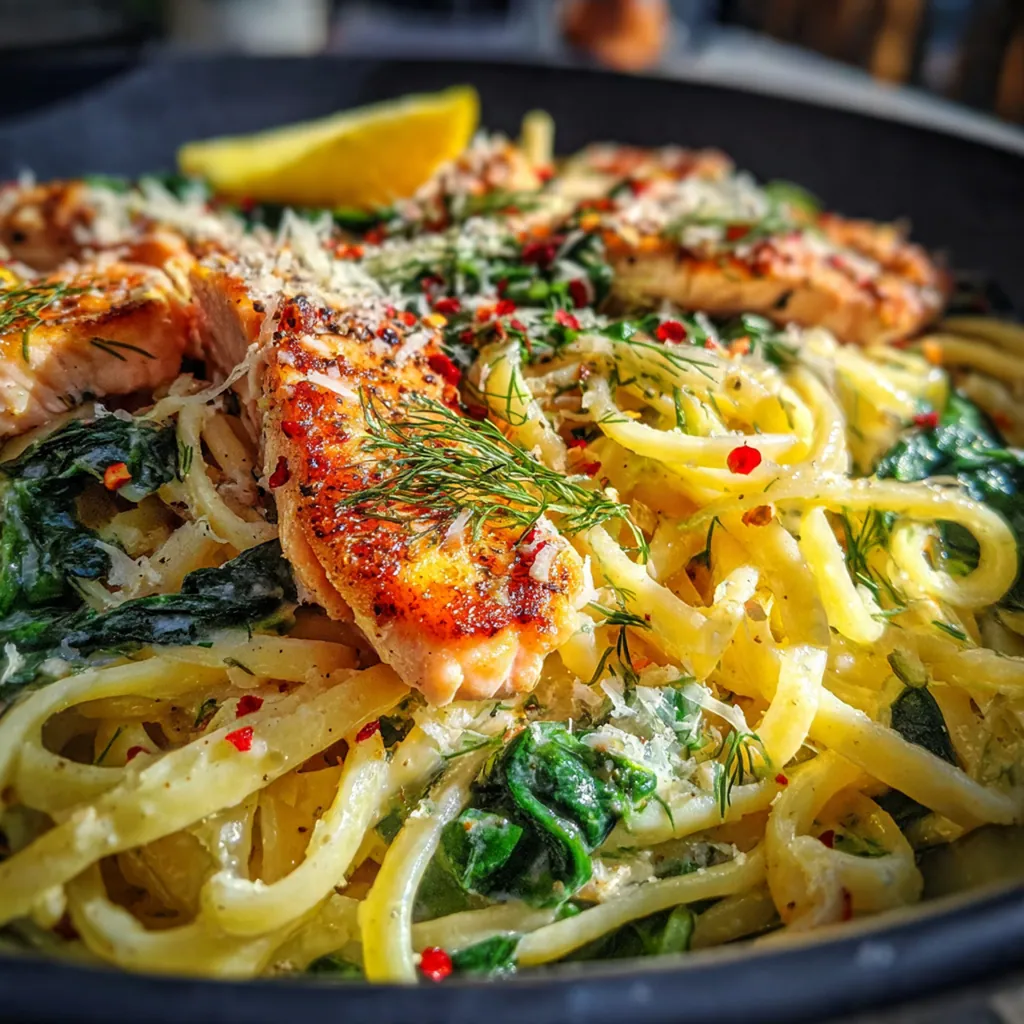
This creamy salmon pasta is my go-to for turning an ordinary Tuesday into something special without spending hours in the kitchen. It’s an Italian-inspired classic that feels luxurious, yet comes together in one pan in about half an hour. You get flaky salmon in a garlicky, lemony cream sauce that coats every strand of fettuccine perfectly. It’s the kind of dish that impresses guests but is simple enough to make just for yourself on a busy weeknight.
Why You'll Love This Recipe
- It’s a restaurant-quality meal ready in just 35 minutes
- One pan for cooking means cleanup is a total breeze
- The bright lemon and fresh dill keep the rich sauce from feeling heavy
- You can cook the pasta and sauce at the same time for maximum efficiency
- Leftovers are just as good the next day
Ingredients You’ll Need
- Dried fettuccine pasta: Its wide, flat shape is ideal for holding onto the creamy sauce, creating the perfect bite every time.
- Salt for pasta water: Salting the water is your only chance to season the pasta itself, so make it taste like the sea.
- Salmon fillets: Look for bright, firm fillets with no fishy odor; fresh salmon has a clean, oceanic scent and a vibrant color.
- Freshly ground black pepper: The floral heat adds a necessary layer of depth that balances the sauce’s creaminess beautifully.
- Olive oil: Use a good quality extra virgin oil here for a hint of fruitiness as you sauté the salmon and aromatics.
- Shallot: Milder and sweeter than an onion, it creates the perfect aromatic base without overpowering the delicate salmon.
- Garlic: Fresh cloves, minced just before cooking, provide that essential punchy, savory backbone to the entire sauce.
- Red pepper flakes: Just a pinch brings a subtle warmth that you’ll notice in the background, not upfront heat.
- Dry white wine: A crisp Sauvignon Blanc adds acidity and complexity, deglazing the pan and lifting all the browned bits.
- Heavy cream: This is what creates that luxurious, velvety texture that makes the sauce so irresistibly rich and satisfying.
- Freshly grated Parmesan cheese: Grating it yourself means it melts smoothly into the sauce, adding a salty, nutty umami kick.
- Fresh dill: Its light, anise-like flavor is the perfect herbal partner for salmon and cuts through the richness.
- Fresh lemon juice: Bottled juice can’t compare; the bright, clean acidity from a fresh lemon is what makes the dish sing.
- Lemon zest: The fragrant oils in the zest amplify the lemon flavor without adding more liquid, so your sauce stays thick.
How to Make It
Boil and Prep the Pasta:
Start a large pot of well-salted water boiling for your fettuccine. Cook it until just al dente, then scoop out a cup of that starchy pasta water before draining. This water is liquid gold for adjusting your sauce later, so don’t forget it.
Cook the Salmon:
Pat your salmon fillets completely dry with paper towels and season them all over with black pepper. Heat oil in a large skillet and cook the salmon for a few minutes per side until it flakes easily. You want it just cooked through, then set it aside on a plate to rest.
Build the Aromatic Base:
In that same skillet, you’ll use the delicious salmon fond left behind. Sauté the chopped shallot until it’s soft and sweet, then add the garlic and red pepper flakes. Stir for just a minute until it’s incredibly fragrant but not browned.
Deglaze with Wine:
Pour in your white wine, and use your spoon to scrape up all those tasty browned bits stuck to the pan. Let it simmer and reduce by half; this cooks off the alcohol and concentrates the flavor for a more complex sauce.
Create the Cream Sauce:
Turn the heat down to low and stir in the heavy cream and grated Parmesan. Keep stirring until the cheese melts completely and the sauce becomes smooth and slightly thickened. It should coat the back of a spoon nicely at this stage.
Combine Salmon and Pasta:
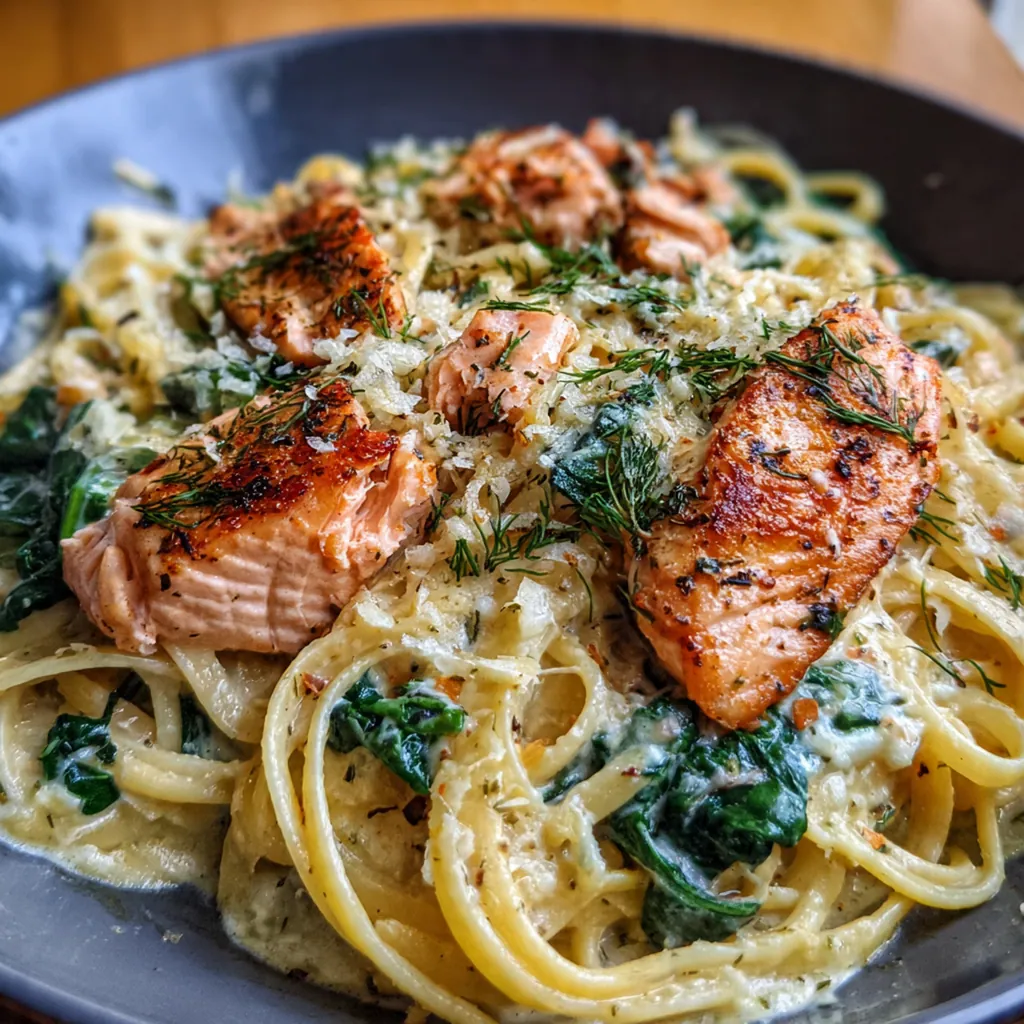
Flake the rested salmon into generous bite-sized pieces right into the sauce, adding any juices from the plate. Then, toss in your drained pasta, using tongs to coat every strand. If the sauce feels too thick, loosen it with your reserved pasta water a splash at a time.
Finish with Fresh Flavors:
Take the skillet completely off the heat. This is when you stir in the fresh dill, lemon juice, and zest. Adding the lemon off the heat preserves its bright, fresh flavor so it doesn’t cook out and turn bitter.
Serve Immediately:
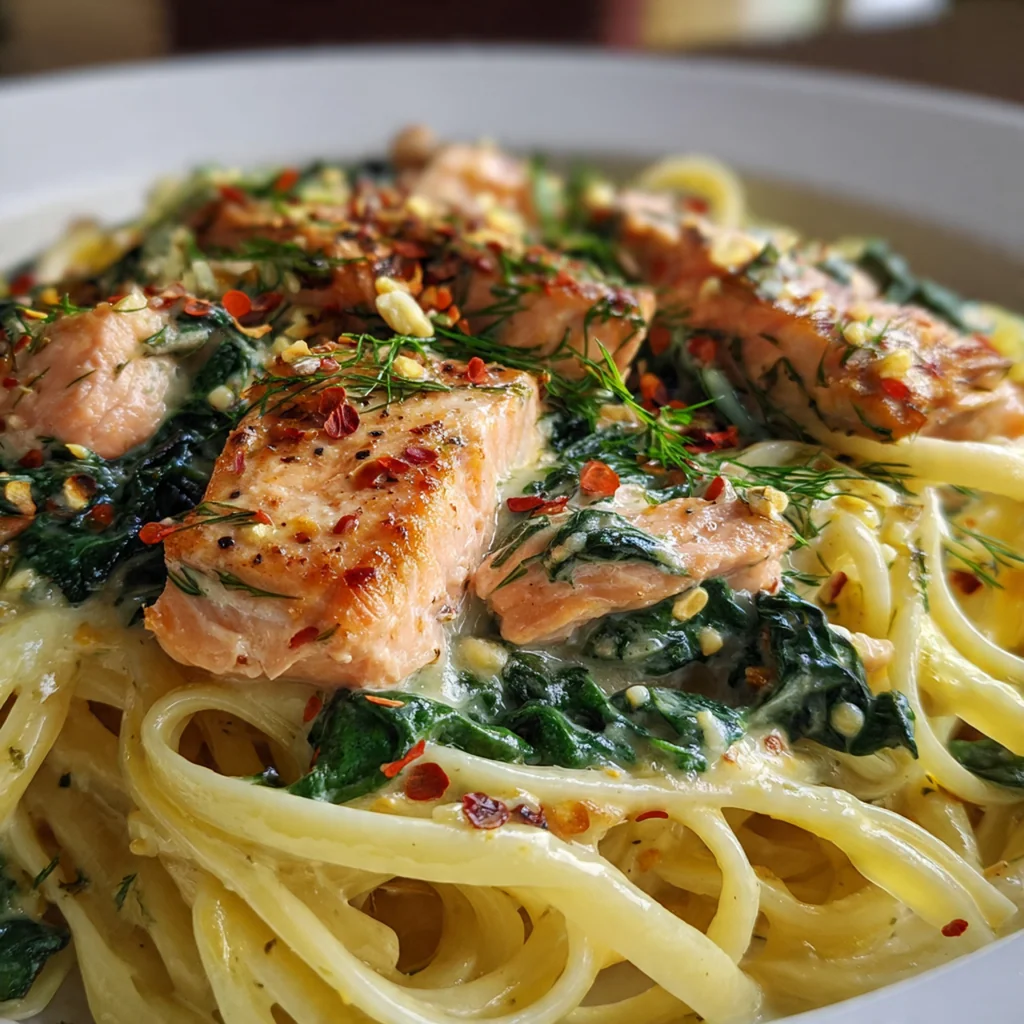
Give everything one final toss, taste for seasoning, and dish it up right away. Garnish with extra dill and a lemon wedge on the side for that perfect, restaurant-worthy presentation.
You Must Know
- Pat the salmon dry for a perfect sear
- Reserve your pasta water to control the sauce thickness
- Add the lemon juice off the heat to keep it bright
- Let the salmon rest before flaking so it stays moist
- I always double the dill because I love that fresh herby punch
Storage Tips
Store any leftovers in an airtight container in the fridge for up to two days. The pasta will absorb the sauce as it sits, so when you reheat it, do so gently in a skillet over low heat with a splash of cream, milk, or even a little water to loosen it back up. I don’t recommend freezing this creamy salmon pasta because the dairy in the sauce can separate and become grainy when thawed.
Ingredient Substitutions
If you don’t have white wine, you can use an equal amount of chicken or vegetable broth with an extra squeeze of lemon to make up for the lost acidity. For the pasta, any long shape like linguine or tagliatelle works just as well as fettuccine. Don’t have fresh dill? A teaspoon of dried dill works in a pinch, or you can use fresh parsley or chives for a different but still lovely herbal note. For a gluten-free version, simply swap the fettuccine for your favorite gluten-free pasta brand.
Serving Suggestions
This rich and satisfying pasta deserves equally simple sides. I love it with a big arugula salad dressed in a sharp lemon vinaigrette to cut through the creaminess. A few slices of warm, crusty garlic bread are non-negotiable in my house for soaking up every last drop of that luxurious sauce. For a fuller meal, add some roasted asparagus or blistered cherry tomatoes right on the side of the plate.
Cultural Context
While pasta with salmon is a modern staple you’ll find all over Italy today, especially in the north, the combination is more a celebration of fresh, high-quality ingredients than a centuries-old tradition. The method of creating a quick pan sauce by deglazing with wine and finishing with cream and cheese is classic Italian *cucina*, but using salmon nods to the cuisine of coastal regions where seafood is king. It’s a beautiful example of how Italian cooking principles—simplicity, freshness, and balance—can be applied to wonderful ingredients from anywhere.
Pro Tips
- Use a microplane for the lemon zest and Parmesan cheese
- Let the sauce simmer gently so the cream doesn’t break
- Taste and season at the very end after adding the salty cheese
- Fresh, skinless salmon fillets give you the best texture and flavor
- I always cook a little extra salmon because it’s so good flaked on salads the next day
Frequently Asked Questions
Long, sturdy pasta like fettuccine, linguine, or tagliatelle are ideal for this creamy salmon pasta. Their broad surfaces perfectly catch and hold the rich, garlicky cream sauce, ensuring every bite is flavorful.
For the best texture, it’s ideal served fresh. The cream sauce can thicken upon standing. If you need to prep, cook the salmon and sauce separately, then combine with freshly cooked pasta just before serving to keep everything perfectly creamy.
You can use an equal amount of chicken or vegetable broth with a squeeze of lemon juice. The acid is key for balancing the rich cream sauce. White wine vinegar (1-2 tablespoons) diluted with water is another good substitute for deglazing the pan.
The salmon is perfectly cooked when it flakes easily with a fork and is opaque throughout, which takes about 4-5 minutes per side over medium heat. Be careful not to overcook it, as it will continue to cook slightly when added back to the warm sauce.
Keep it simple to let the pasta shine. A crisp green salad with a lemony vinaigrette or roasted asparagus makes a perfect side. For an Italian-inspired touch, serve with crusty bread to soak up the extra creamy sauce.