

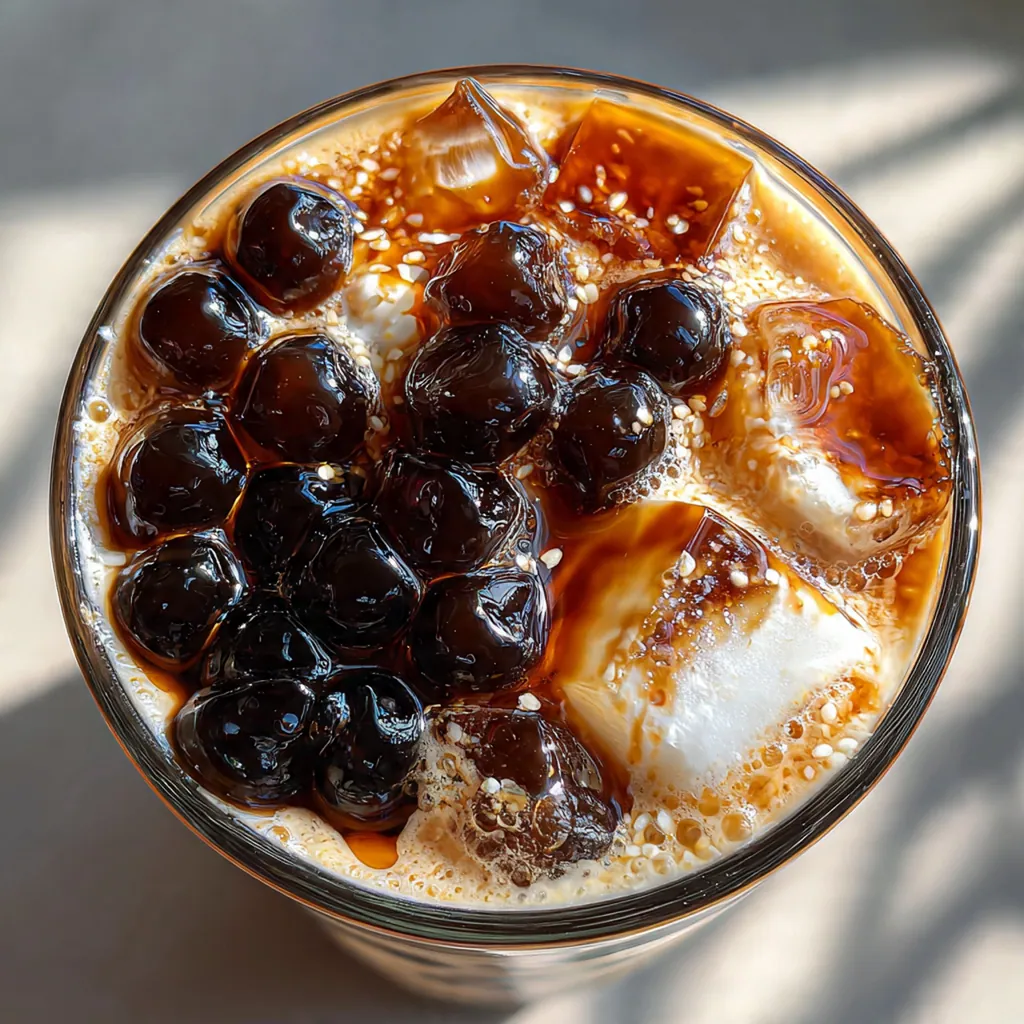
This homemade boba recipe lets you bring the Taiwanese bubble tea shop experience right to your kitchen, no expensive trips required. With chewy tapioca pearls soaked in a rich, aromatic brown sugar syrup, it’s a deeply satisfying and customizable drink. Making your own boba at home means you control the sweetness and the quality of every ingredient. It’s a fun project with a deliciously sweet and creamy reward in every glass.
Why You'll Love This Recipe
- Chewy pearls in a deeply flavorful brown sugar syrup make it better than most shops
- Completely adjustable sweetness and milk choices to match your exact craving
- It’s fresher and far more cost-effective than any cafe version
- A fun, interactive process that’s perfect for a weekend project
- It’s my favorite way to cool down on a warm afternoon
Ingredients You’ll Need
- Dried black tapioca pearls: These are the star of any boba recipe, giving you that signature chewy texture; make sure to get the quick-cooking black kind for this method.
- Brown sugar: This creates the rich, molasses-kissed syrup that soaks into the pearls and gives the drink its signature flavor and amber color.
- Water: You’ll use it for three things – cooking the pearls, making the syrup, and brewing the tea; filtered water gives the purest taste.
- Black tea bags or loose tea: Strong black tea like Assam or Ceylon forms the robust base that stands up to the milk and sweet syrup.
- Granulated sugar: This is optional for sweetening the tea base itself; I often skip it since the boba syrup adds plenty of sweetness.
- Milk: Dairy or your favorite plant-based milk like oat milk adds the creamy finish that makes bubble tea so comforting.
- Ice cubes: Essential for serving the drink cold and creating that beautiful layered look in the glass before you stir.
- Additional brown sugar for coating: A final roll in sugar makes the pearls extra sticky and sweet; it’s a small step with big payoff.
How to Make It
Boil and Simmer the Tapioca Pearls:
In a large pot, bring a big amount of water to a rolling boil before adding your dried pearls. Stir them gently right away to prevent them from sticking together in a clump. Then reduce the heat and let them simmer until they’re soft and chewy with just a hint of translucence in the middle, which usually takes about 20 to 25 minutes.
Create the Brown Sugar Syrup:
While the pearls cook, combine brown sugar and water in a small saucepan over medium heat. Stir it constantly until all the sugar dissolves and the mixture thickens just slightly into a fragrant syrup. This only takes a few minutes, then you can take it off the heat and let it wait for the pearls.
Drain and Soak the Cooked Pearls:
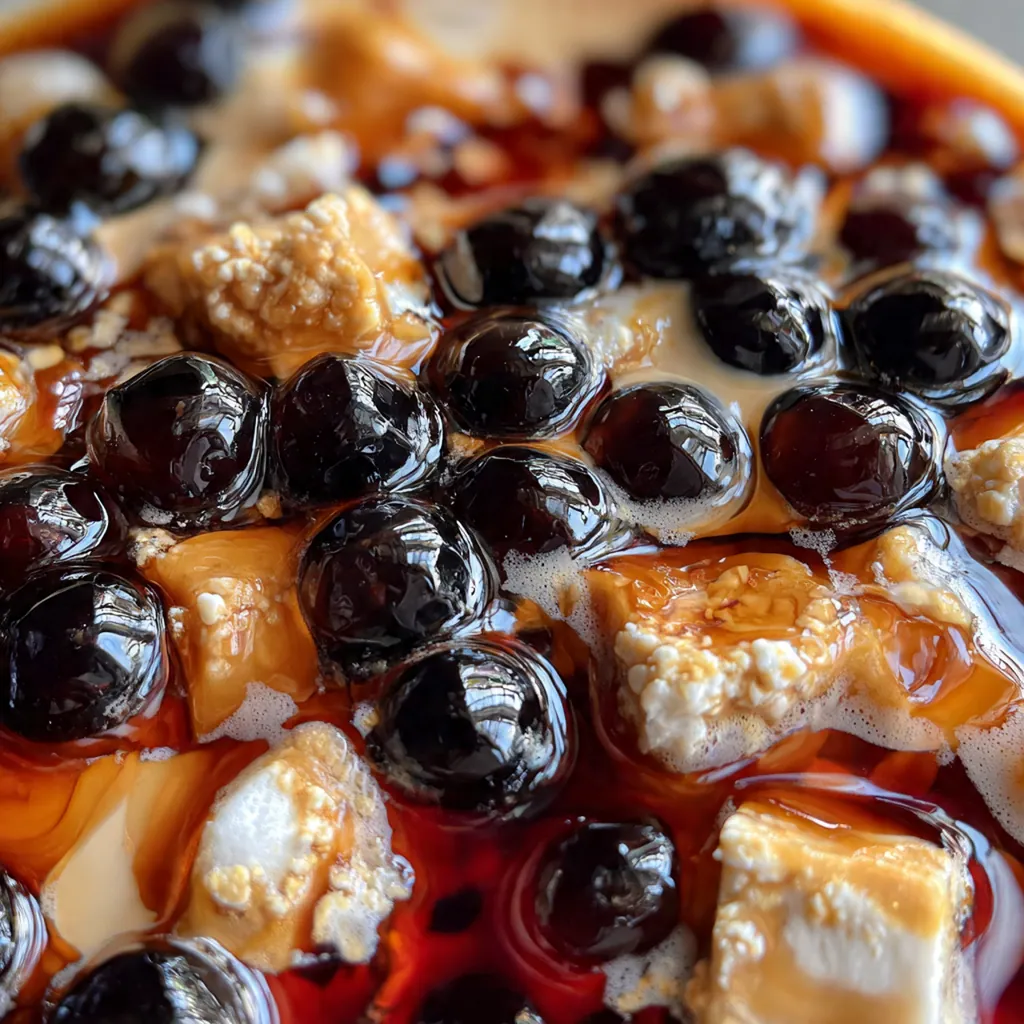
Once your pearls are perfectly chewy, pour them into a fine-mesh sieve and give them a quick rinse under cold water to stop the cooking process. While they’re still warm, toss them right into that waiting brown sugar syrup and stir so every pearl gets coated. Let them soak in there for at least 15 minutes so they drink up all that wonderful flavor.
Steep a Strong Pot of Tea:
In a separate pot, boil water and then take it off the heat to add your tea. Cover it and let it steep for a full five minutes to get that robust black tea flavor that won’t get lost. If you like your tea base sweet, stir in some granulated sugar now, then let the whole pot cool down to room temperature.
Prepare Your Serving Glasses:
Grab four large glasses – the 16-ounce kind is perfect for this boba recipe. Divide your syrup-soaked boba pearls evenly among the bottoms of the glasses. Then, top the pearls in each glass with a generous handful of ice cubes to get everything nice and cold.
Assemble the Bubble Tea Layers:
First, pour the cooled tea over the ice in each glass. Next, slowly top it off with your choice of cold milk, which will create those beautiful separate layers. For an extra touch, you can drizzle a little more of the brown sugar syrup down the inside of the glass for added sweetness and a gorgeous swirl effect.
Stir and Serve Immediately:
The final step is my favorite – give each glass a big stir with a wide straw to mix the tea, milk, and syrup-coated pearls together. Sip it right away to enjoy the boba at its absolute best, while the pearls are still wonderfully soft and chewy.
You Must Know
- Cooked boba pearls are best enjoyed the same day you make them
- Always keep your cooked pearls submerged in syrup to prevent sticking
- Using a timer for the pearls is non-negotiable for perfect texture
- A wide straw is essential for the full experience
- It’s the little details that make this boba recipe shine
Storage Tips
Your boba is truly at its peak right after you make it, so try to enjoy it fresh. If you have leftovers, the best you can do is keep the cooked pearls submerged in their sugar syrup in an airtight container in the fridge for up to 24 hours. The tea base can hang out in the fridge for about three days. When you’re ready for more, gently reheat the pearls with a splash of water in a saucepan or the microwave to bring back their chew, because they will firm up when cold.
Ingredient Substitutions
If you’re out of brown sugar, dark muscovado sugar is a fantastic swap that gives an even deeper flavor. For the tea, any strong black variety works – I’ve used English Breakfast or even Earl Grey in a pinch for a floral twist. Oat milk is my top choice for a plant-based option because it’s so creamy, but almond or soy milk work too, just know they’ll be a bit thinner. You can even skip the tea entirely for a caffeine-free version and use just the brown sugar milk with the boba for a super simple treat.
Serving Suggestions
This boba milk tea is a complete treat on its own, but it pairs wonderfully with other Taiwanese snacks for a little themed spread. Think buttery pineapple cakes, soft and chewy mochi, or even something savory like salty popcorn chicken to balance the sweetness. For a simpler pairing, just some butter cookies or shortbread are perfect for dipping. It’s fantastic as an afternoon pick-me-up or a fun, non-alcoholic dessert drink to end a meal.
Cultural Context
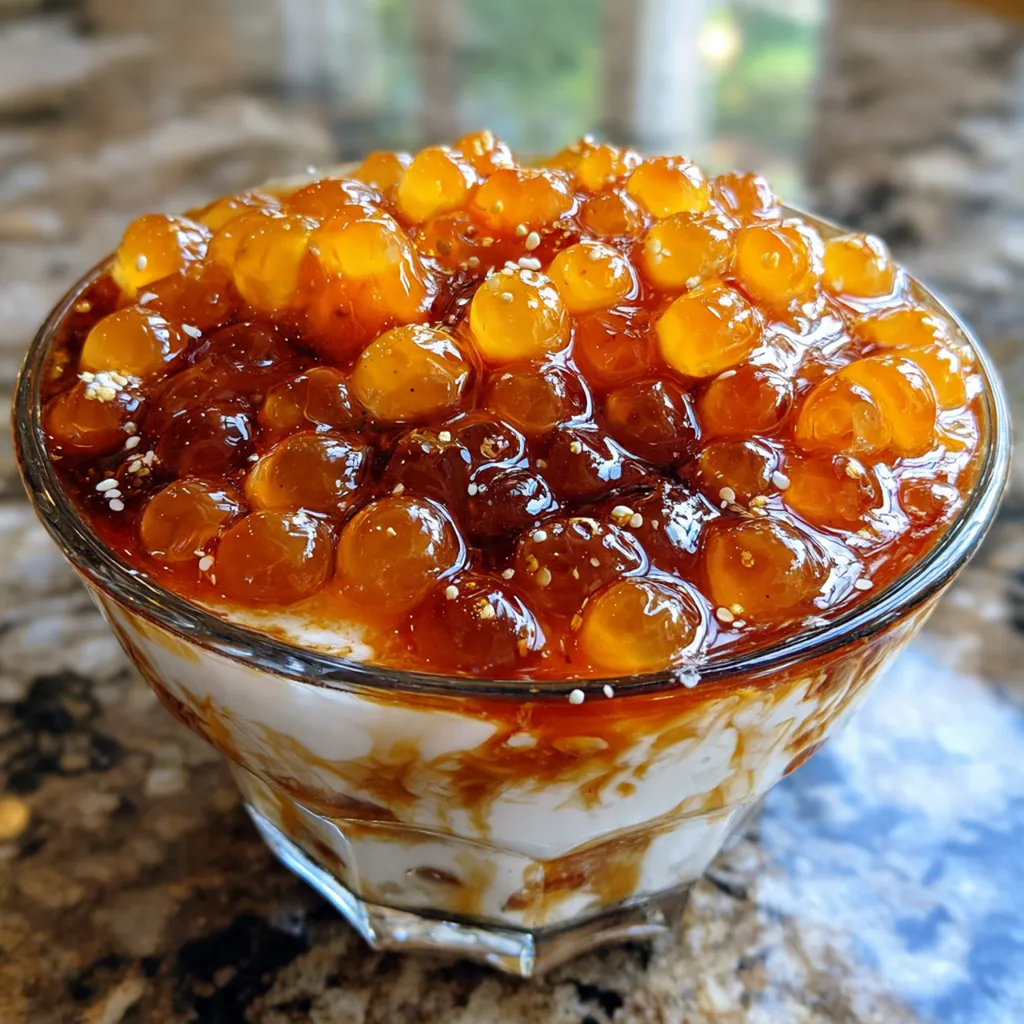
Bubble tea, or boba, started in Taiwan in the 1980s and became a global sensation almost overnight, with shops now on every corner from Taipei to Toronto. At its heart, it’s a beautiful example of Taiwanese innovation, taking traditional milk tea and adding the fun, chewy texture of tapioca pearls for a whole new experience. It’s more than just a drink – it’s a social ritual, often shared with friends, and making it at home lets you tap into that joyful, communal spirit. The specific version with brown sugar syrup, sometimes called ‘tiger sugar’ milk tea for its dramatic stripes, is a modern classic that highlights the deep, caramelized flavors so beloved in Taiwanese desserts.
Pro Tips
- Set a timer for your pearls – overcooked boba turns mushy fast
- Let your brewed tea cool completely before assembling to prevent a watery drink
- Start with less sugar in the syrup; you can always add more later
- Wide straws aren’t just for show, they’re a functional necessity
- My kitchen scale is my secret for perfectly portioned pearls
Frequently Asked Questions
A strong black tea is essential for boba to stand up to the milk and sugar. Use a robust variety like Assam, Ceylon, or a classic black tea bag. Brew it strong for the best flavor foundation that won’t get lost.
You can prepare components ahead. Cooked tapioca pearls are best used within a few hours, but you can keep them warm in the brown sugar syrup. Brew the tea and make the syrup in advance, then assemble with ice and milk just before serving for the freshest taste.
You can easily use plant-based milk for a dairy-free boba. Creamy options like oat milk, almond milk, or coconut milk work wonderfully and are highly recommended for mimicking the classic rich and creamy texture.
The pearls are ready when they are fully translucent with no hard, white centers. After boiling, they should be uniformly chewy. Taste one to test – it should be soft and gummy, not crunchy or mushy.
Boba tea is a complete drink and dessert in one, perfect on its own. In Taiwanese tradition, it’s often enjoyed as an afternoon treat or a sweet ending to a meal, sometimes paired with light snacks like mochi or pineapple cakes.